The women’s studies program is an interdisciplinary department that is known by few people. However, has become increasingly famous over the years. And it has made significant contributions to different disciplines and continues to do so.
So how is the entry process to this department? Here is the “Women’s Studies” master program with the application process to Istanbul University. Indeed with the individual and social reasons behind the process…
By 2019, I returned to my student life to have master’s degree in Women’s Studies. After graduating from the International Relations department, I wanted to gain different experiences rather than immediately entering the job search process. Master’s degree has never been my priority. However, my mind was always outside of this country to personal observe of what’s happening. Additionally to learn a new language and to discover new places… Well, I did that too. First I went to a language school, then I worked as a volunteer in an EU project away from home.
Over the years, I found myself in different countries, in productive projects with great people. In 2017, the dates of the postgraduate interviews of two universities coincided with a project. Which was on hate speech and taking place in Portugal. Where I was going to be a a facilitator… In other words, I took my chance for the project and did not go to those interviews. Frankly, I would still make the same decision.
How was the decision to have a master’s degree 5 years after graduation?
First of all, let’s start by choosing the undergraduate department. I do not think that the choices made after the university entrance exam very logically. At the age of 17-18… Namely, some youngsters are having family pressure, some are worried about high or low scores. And some just want to study only to have a degree.
Nevertheless, deciding to do a master is a completely different process. You think, evaluate, after the discovery you experience within yourself. Focus only on your area of interest. You know you have words to say and articles to write. For me, this area where I found myself was civil society. Accordingly, I decided to blend this practice I gained with theoretical knowledge.
Years ago, one of my friends started doing her master’s in the Women’s Studies department. She was writing to me from time to time and we were pondering on some subjects together. As well as she was saying, “This is exactly the field where you should be”. Admittedly, this phrase was very encouraging to me.
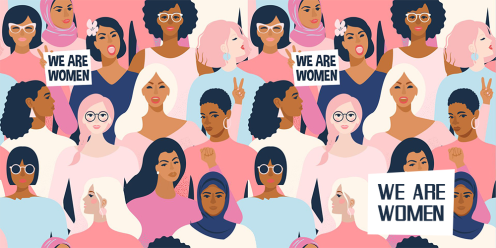
Over the years I have seen women left in the background. The language was masculine, politics was masculine, the academy was masculine. Public sphere was a place where men dominated. The patriarchal structure brought with it male violence. Physical as well as psychological, social and even digital violence…
I tried to intervene every time I witnessed male violence. For instance once when I was 12… While trying to protect our neighbour who was exposed to the physical and psychological violence by her husband. Insistently calling the police in the middle of the night and asking for help… Or trying to warn my friends in high school. Who were exposed to dating violence under the name of “love”. At that time, I was not even aware of the definition of dating violence. However, it was obvious that something was wrong.
Unfortunately, there were times when I could not interfere. Sometimes I could not lend a helping hand to my relatives who were exposed to psychological and social violence. As well as economic violence at home by their husbands, fathers and sons. For this reason, I thought it was necessary to be on the field to do more. I have come a long way in the field of youth work in civil society and always tried to bring gender equality to the fore. Although I’m active in the field, I aimed to combine this practise with theory. Thus I could take stronger steps with a collective consciousness. Women’s Studies seemed like an area where I could feel myself belonging.
What is Women Studies? How Is It To Be Interdisciplinary?
The Women’s Studies Master’s Program is a Department of Social Sciences Institute. This interdisciplinary program encompasses a social science-oriented education structure created by academicians working in their fields. The meeting of disciplines such as political science, communication, literature, sociology, psychology, philosophy, law and history on a common ground…
The aim of the program is to acquire the necessary knowledge and understanding of the theoretical and methodological issues created in the field of women’s studies and gender. As well as to conduct field research and to provide independent and fair knowledge production, understanding and presentation in the academic field.
Independently of the concepts such as defending and protecting women’s rights in order to favour women as it is thought. In fact, these are the studies that are used to determine the situation. Analyze and reveal the social reality. It is the work that emphasizes that the enemy of feminism is not men, but the patriarchal social order. That should act with a collective consciousness as much as an individual for gender equality.
When I stepped out of the women’s studies building and went to the Faculty of Political Sciences or the Faculty of Literature, I felt about being interdisciplinary much better. On the one hand, we were getting an intriguing lesson such as “Woman in Anatolia from Prehistoric Ages to Antiquity” by a philology professor. On the other hand, we could have visual culture lesson by the communication professor.
Why Women’s Studies?
It’s because I chose to be in the existential relationship between knowledge and life. To make femininity and the struggle of women visible… As a woman, I chose to claim my own story and unearth the stories thrown under the ground. I would like to take an active role in the creation of maps for the future. For the cultural complexity that we call tradition. To gather the personal together with the collective…
Yes, the department is called “Women’s Studies” not just gender. Because women, as part of the world population, exist.
How Do the Interviews Go?
I think interviews depend on the energy and guidance of both you and the professors who are interviewing.
In July 2019, the front of the hall where the interview was to be held at Istanbul University, was quite crowded. There were candidates of almost every age group and gender. I had to wait a long time as they took it inside in alphabetical order. When it was my turn, I entered the classroom where three professors were waiting. The first impression was wonderful! The kindness and smiling faces of the professors relaxed me a lot.
First of all, they wanted to get to know me. Asked why I’ve chosen this department. Thus I listed my reasons and wishes. While explaining all these, they caught the details and asked questions in those areas. For instance, when talking about the projects I experienced on gender equality, we talked deeper about it so they measured both my interest and my knowledge. The question of which field I would like to work in was also asked. They wanted to find out whether there is any academic work I know, according to the answer I gave. So, basically, who I knew in the literature was wondered.
In addition to the academy, several personal questions were asked as well. In order to get to know the student just to understand the interest in the field. To be honest I was waiting for more questions to be asked. Nevertheless, they thanked me and said that was enough; the interview was over.
When Are The Results Announced?
The results were announced exactly 10 days after the interview. And yes, I was accepted with full marks from the interview! This could balance my not very high ALES score and undergraduate average.
Registration started after about 1.5 – 2 months. But I had to be in the Balkans in order to carry out training, at the time of registration. Which should be done within a certain date range. Fortunately, I had a friend whom I met years ago on a project. Afterwards I gave her power of attorney for my school proceedings. Solidarity was such a thing! Thanks to her, my university enrollment was made. By the way, we met at a youth exchange project in Estonia. Now this wonderful person was about to be my classmate.
Women’s Studies Classes and Professors
I can say that we had a lot of difficulty in choosing each course. Because there are courses that are more beautiful than the other and rich in content. Scientific Research Methods and Publication Ethics, Feminist Theory and Seminar courses are already compulsory courses. Body Fiction in Contemporary Western Theater and Art… Ottoman Turkish Modernization and Women… Neuroeconomic Approaches in Gender Equality… Gender and Law… Media, Visual Culture and Gender… These are just some of the elective courses.
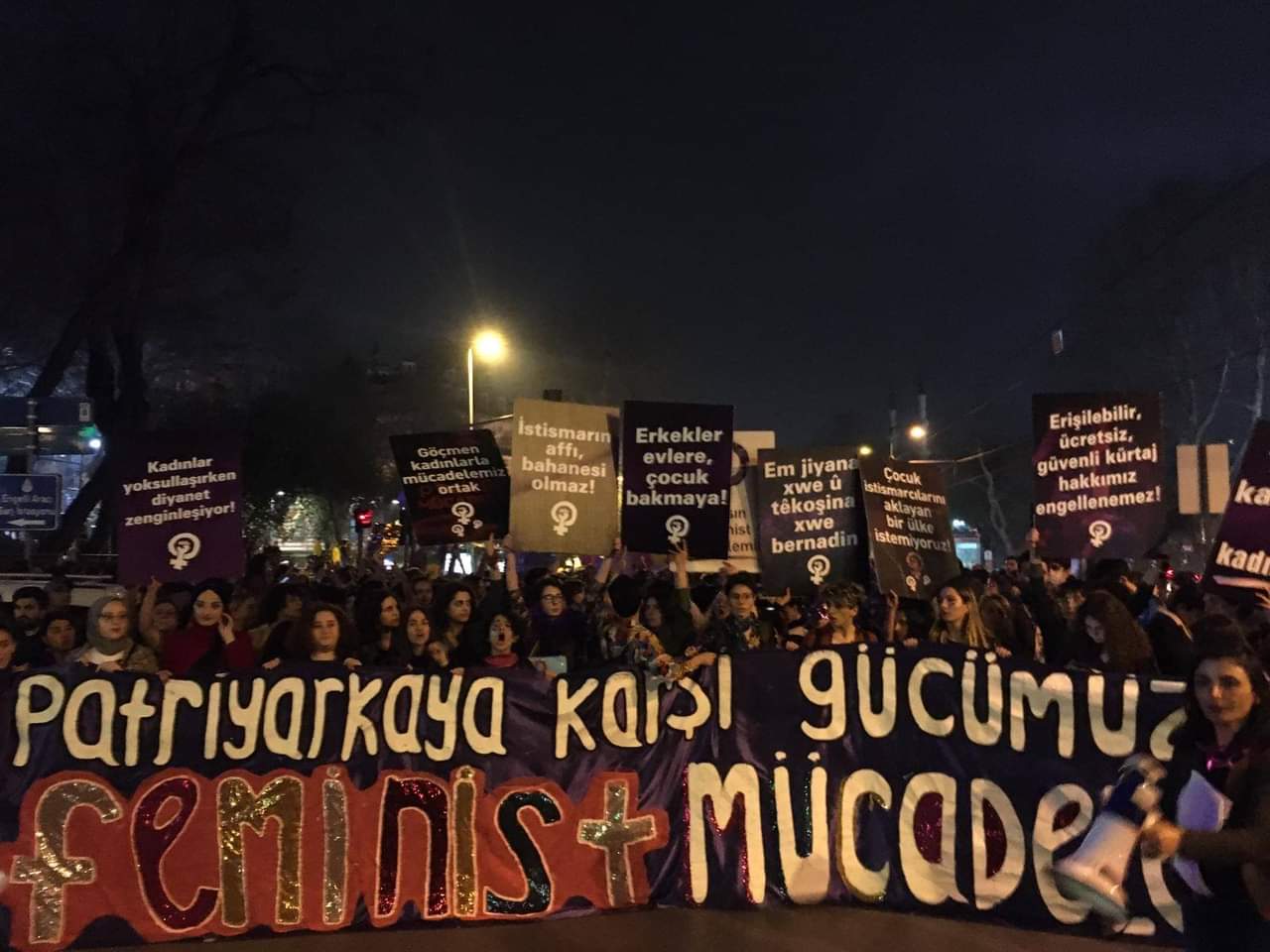
The academic staff is just as rich. I realized in the first weeks that I can find myself in this field. I feel this not only because of the content of the classes. But also because of the approaches, shares and knowledge of our valuable professors. They do not build a hierarchic relationship with us. Truly we are always given the opportunity to speak and our word is valued. In addition to all these, we are having the lessons in great solidarity. Meanwhile shouting “Viva Women’s Solidarity” in the streets, these magnificent people make the meaning of this word felt in the academy.
Although the majority of the department consists of female academicians, indeed, we also have male professors. Though there is a perception that the department is only for women; some students were male and LGBTI+ friends in our class. It is really important that Women’s Studies are now also preferred by men.
Last Words on Feminism
Over the years, many gains have been made in favour of women thanks to the feminist struggle. The word, the idea, of feminism, was popularized. Women have struggled for centuries to create a better world. However, all progress achieved so far can be eliminated through violence against women. Unfortunately, gender-based violence is the most extreme form of global and systemic inequality experienced by women and girls. Without recognizing geographical, socio-economic or cultural factors…
Public perception must be changed in order to end violence against women. In order to resolve conflicts in the private and public spheres, barriers to culture and tradition must be removed to find non-violent ways. Women’s Studies is one of the keys to demonstrating our commitment to achieving an equal and just future for all, taking all efforts in this field seriously.
Above all; throughout history it has not been easy to obtain our rights. Such that it still continues. This gender, which makes up about half of the world’s population, will continue to struggle. By sharing, talking, creating awareness and being in solidarity… For a more equal, fairer, more livable society as well as the world.
You will never walk alone! ♀